Are The Street Lights Of The Future Solar Powered?

By

Lighting experts at Philips have come up with a new solar-powered LED street lighting solution. The new technology, SolarGen2 off-grid system, is unique in that it harnesses sunlight to provide reliable lighting after dark. The panels, constructed on top of the street lights, collect the energy of the sun during day, and re-use this energy during the night when extra light is needed.

As darkness falls in cities around the world, many simply switch on the lights and daily life continues. But this is not the case for 1.6 billion people around the world that live in a city off the electricity grid. What this means is pretty hard to understand for people living in the Western world. When the sun goes down, every-day life simply stops. Artificial light leads to safety in public space, and the possibility for an active life in the evening hours. Street lighting is also important from an economic perspective — extracting the day means having more options to sell stuff from little shops or kiosks on the streets. In less developed cities this can potentially help people to make the step towards financial independence. In the context of African cities this option would mean a huge step forward for individual entrepreneurs as well as for the city as a whole.

There is still a long way to go, but on a micro scale the results of the SolarGen2 off-grid system show vast improvements in safety for local people and an increase in the number of usable hours in the day. People can continue to work, study and enjoy leisure activities after dark. With this innovation, Philips hopes to play an important role in challenging the issues that less fortunate cities face. These small interventions, that sometimes don’t seem very spectacular, can make a huge difference for local communities and prepare upcoming cities for a future with clean energy. As a brand that has a huge tradition in lighting, the company sees a market in bringing light to the fast growing cities of Africa in a clean and efficient way, improving the lives of those living off-the-grid.

2 Comments

  1. By Sunlight

    Cool stuff!

    I’d love to see the specifics of this project. Was it publically financed, or was it a PR/Test project by Philips?

    One thing that irks me is that sunlight currently is not very efficient, and thereby not very cost-effective. In an area such as sub-saharan Africa, that’s not a factor to take lightly. I’m a big supporter of green energy, I think it’s vital, I think it has to happen now, despite it being more expensive, but not in the poorest places on Earth. Why? Because nobody will want to pay for it on a large scale.

    Some simple arithmetic:
    Firstly: 15% of the sun’s light energy that falls on the surface is converted to electricity. Unfortunately, that’s as efficient as solar panels get, and we probably won’t go above 30% for decades.
    Secondly: About 20% of our electricity in our lamps actually gets turned into light. The rest is wasted energy, mostly through heat. That’s actually a very good rate, mostly reserved for LEDs (currently not great for long-distance light, as its composed of many weak individual lights)

    So to simulate the sunlight on 10m2, you need 100 / 15 * 100 / 20 times the solar panels: Or about 300m2 of solar panels.

    Now of course, you don’t need the brightness of the sun, half as bright as regular daylight is okay, and you can light it up for 8 hours, and power it for only 4 hours between say 8 o’clock when its dark and 12 o’clock midnight. But that still means you need 7m2 of solar panels to power 1m2.

    On the other hand, off the grid solar panels have efficiency losses because they require batteries. You’ll know that batteries deteriorate. For example, electric cars usually have batteries replaced every 5 or 10 years, which is a big obstacle to making them cost effective at the moment, sadly. Some estimates range for 50% losses due to inefficiency.

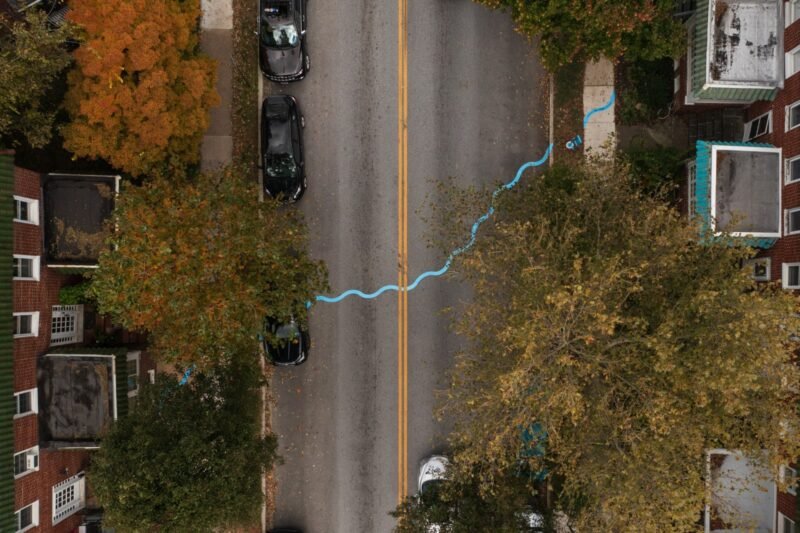
    And that’s pretty much what we’re seeing. On the first picture the projection makes it seem like a small panel, but it’s longer than a human body, probably a little bit over 2m. I’d estimate the panel is about 2.5m2. Panels go for about $1000 per square meter. So we’re talking about 2500 dollars per one of these lights!

    One musn’t forget that most solar panels have about 80 to 60% efficiency after 10-20 years. That means that there will be extra costs involved.

    It’s not a coincidence that solar panel businesses don’t exist. Retailers, yes, but consumers? No. Barely any companies right now generate their own electricity and sell it cheaper than coal, gas or oil. If it was truly cheaper to produce energy using solar panels, businesses would set them up and sell the electricity, because solar energy is ubiquitous and free. But that doesn’t happen, because the panel expenses, maintenance and efficiency can’t compete with fossil fuels yet. Businesses do sell it, but at a premium, to green consumers willing to pay the premium. Without that premium, it would lose them money.

    So tell me what you would do. Go to the poorest places on Earth, and say, I can install two types of light. One which costs a premium, and is not cost-effective, but it’s clean. And the other, is not clean, but it’s affordable.

    They’ll say, we have enough money to provide either 20% of the people with light from the clean solar energy, after purchasing expensive solar panels that won’t last. But we’d rather get 60% of the people light with the same budget.

    Clean energy is something the developed world should take the lead on. We’re the poluters of this planet. The poorest are at greatest risk from climate change and are the smallest contributors to climate change.

    I’m all for green. But let us start here. I’d love to tax every Dutch person extra to force them to pay a premium for green, that’s how important I think green energy is. But let us not provide expensive solutions to people who cannot afford expensive solutions, as it’s not in their advantage, without taking responsibility ourselves.

    Grid-based solar works far better in these communities. Don’t tell me you can’t install a cheap generator and some cheap lights around town, if you can install 30 solar powered lights costing probably between 60k and 100k, requiring 20-year maintenance that Philips probably won’t offer.

  2. By LeeAnn

    When I grew up there were times when we had to pump our own water and had to use an out house. You don’t realize how isolated you can feel when you have no power and light. Night can be so dark when you are in the middle of it. I am glad to read that solar power can bring in the light.

Post Comment