Trend 1: Marketing Is Urbanism

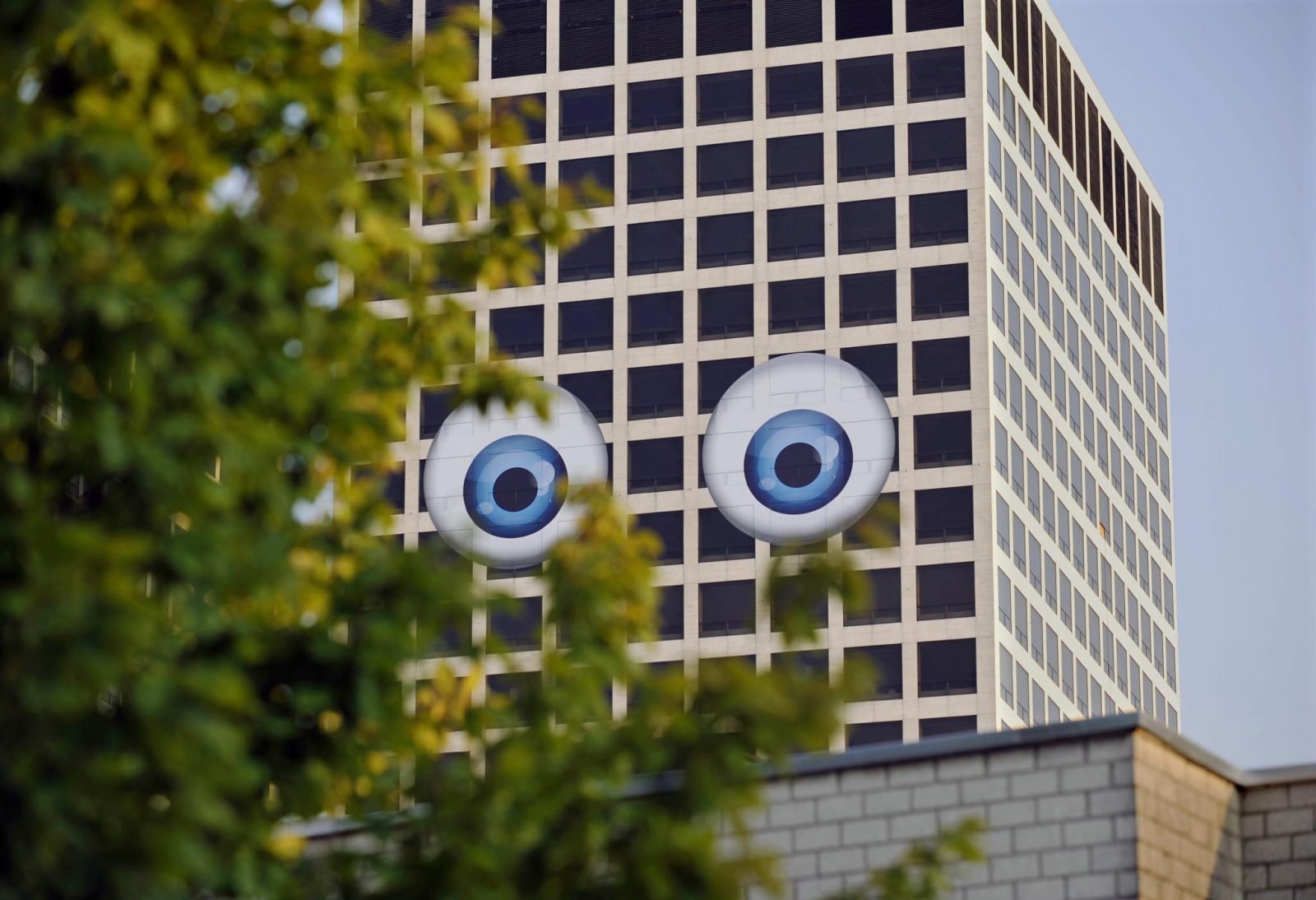
In 2010 diverse campaigns broke the straight barrier between public space and brand promotion. Brand exposure goes beyond ordinary advertising and even one step further from guerrilla marketing — it has become an integral part of urbanism, urban planning. Since a growing number of governments have less money to spend, they need the financial support of world-leading companies to take care of their primary tasks. Brands that are willing to pay for it are increasingly able to sophisticatedly show their message in public space. Urbanism is marketing, as we already knew, but marketing has also proved itself to be a form of urbanism.

More and more marketing initiatives take the urban sphere as their canvas, while urban plans are communicated as if they are sun cream or dog food. With their Fun Theory campaign, Volkswagen seems to brilliantly understand the potential of the daily urban space for marketing purposes. The only thing needed to attract the full attention for your brand is to come up with an unexpected and remarkable project in the public sphere that provides an unorthodox experience, such as the slide that was made in a subway station in Berlin, giving people a fast way down. Or the transformation of a normal staircase into a piano in a subway station in Stockholm, that were not only fun, but also meant to positively influence the behavior of the subway travelers. And it worked: stair use increased by 66%, and, more importantly, the YouTube video was watched more than 13 million (!) times.

A brilliant example of completely integrated city-sponsoring are the Barclays Cycle Super Highways and its bicycle hire program in London. Inspired by its Mayor, London tries to catch up with the increasing popularity of cycling in metropolitan areas around the world. (For further elaboration on the cycling trend, check out trend 7 of 2010.) The British consumer bank Barclays has strongly involved itself with this aim. The bank gives name to this cycle super highway system, but also lends its corporate color to the project. As Springwise explains, “Barclays’ effort will forever link its brand in Londoners’ minds with bicycling and sustainability”. Soon, Chicago’s public transportation system will have names such as ‘McDonald’s Line’ and ‘IBM Station’. The Chicago Transit Authority (CTA) is planning to organize an auction for companies enabling them to buy names of subway lines and stations as promotion for their brands. Dubai is already experimenting with sponsored subway station names. Doing so, 10% of the complete construction costs of the subway system were covered.

Cities in general are hot these days, and a lot is written about cities and urban spaces. Brands look for involvement in urban spaces, not in the first place to approach and impress passers-by and locals, but also to find a huge audience on the Internet, since all remarkable projects are featured. Inhabitants are not the only consumers of urban space any more, but brands take the urban space into the cloud. We strongly believe that this trend is going to develop further in the next years.

This article belongs to the Top 10 Trends For 2011. Over the last year we have been writing articles about urban culture and innovations in cities on a daily basis. Reflecting on 2010 and looking into 2011 we have put together a list with ten of the most remarkable trends that we spotted. We would like to deepen them out a little in a series of articles published this week on The Pop-Up City.

This entry was posted in Uncategorized and tagged , , , , , , , , , , , , , , , , , . Bookmark the permalink. Post a comment or leave a trackback: Trackback URL.

3 Comments

  1. Kevin
    Posted Friday January 7, 2011 at 9:08 pm | Permalink

    Misc. thoughts:

    Capitalism is the reason so many people stopped riding their bikes, stopped taking the stairs, stopped having fun. So its interesting that big businesses are now re-presenting fun and leisure and healthy practices as if they discovered these things.

    Sponsored subway stations or subway lines sounds like the path to private subways or to incentives for people who shop these brands. = Is your existence/presence/words/image on a McDonalds Subway line owned by McDonalds?

    Brandism will replace racism. Good or bad?

  2. Posted Sunday January 9, 2011 at 3:08 am | Permalink

    I shall not say I disagree with using public spaces for brand sponsoring – especially if brands find ways to present themeselves in a creative and esthetical way. On the other hand, it is extremely important to keep the public areas open for ordinary citizens too. Excluding NGOs and private initiatives from spaces that belong to all of us makes huge loss for the city spirit. Delicate balance has to be preserved here…

  3. Joop
    Posted Monday January 10, 2011 at 1:11 pm | Permalink

    Thanks for the comments. Positive thoughts come up when private money is used to fundamentally contribute to the livability of the city. Specifically in the Barclays example the money is used to construct a piece of public infrastructure that was already on the mayor’s list. A second criteria should be that it is not advertising, but a sponsor deal. Brands pay to be an engaged partner in achieving certain city goals. Third, the city itself should set the minimal quality level of a project. Brand involvement is particularly interesting when it adds quality to the place.

10 Trackbacks

  1. By Top 10 Trends For 2011 — The Pop-Up City on Friday January 7, 2011 at 2:43 pm

    [...] Marketing Is Urbanism [...]

  2. [...] This post was mentioned on Twitter by Richard Florida, World Landscape Arch, Fiona Belt, Bernardo Farill, Emile HOOGE and others. Emile HOOGE said: When marketing becomes a form of #urbanism http://ow.ly/3A2aw (via @popupcity) This looks fun but could go wrong, couldn't it? [...]

  3. By Signs of the Times | urbanhistori on Thursday January 13, 2011 at 8:08 pm

    [...] is not to say that I am against all urban advertising.  As this post clarifies, there is a definite, and I would even say critical, place for advertising in cities.  [...]

  4. By A Trashy Hotel — The Pop-Up City on Tuesday January 25, 2011 at 11:57 am

    [...] for an environmental problem, it is also meant to be a a form of brand exposure. We already predicted that marketing is slowly becoming an integral part of urbanism. Brands are increasingly able to [...]

  5. By Audi Spectacle — The Pop-Up City on Monday January 31, 2011 at 11:01 am

    [...] our Top 10 Trends for 2011 we marked ‘Marketing is Urbanism’ number 1. Advertising on huge billboards along the ringroad is not enough any more, which pulled [...]

  6. By AOL’s Rainbow City — The Pop-Up City on Friday May 27, 2011 at 2:40 pm

    [...] predicted the top trend of 2011 to be ‘marketing is urbanism’, which stands for the increasing involvement of brands and companies in shaping the urban [...]

  7. By Let’s Paint The World’s Ugliest City — The Pop-Up City on Monday September 12, 2011 at 7:48 pm

    [...] initiated by a huge international company. Therefore this is another example that fits with the marketing is urbanismtrend that we wrote about at the beginning of this year as one of the most important trends in [...]

  8. By The World’s First Ad Campaign You Can Kick — The Pop-Up City on Wednesday September 14, 2011 at 11:20 pm

    [...] great form of advertising that helps public space to improve, instead of worse as described in our marketing is urbanism article. Thanks for the tip, [...]

  9. By Top 10 Trends For 2012 — The Pop-Up City on Tuesday January 3, 2012 at 1:12 pm

    [...] design, marketing and technology. It became a pretty successful bunch of articles. Our number 1, Marketing Is Urbanism, even got tweeted by the one and only Richard Florida. Reflecting on what we’ve written in [...]

  10. [...] два примера особенно интересны с позиции роли урбанизма в маркетинге. Влияние торговых марок давно уже вышло за пределы [...]

Post a Comment

Your email is never published nor shared. Required fields are marked *

*
*

You may use these HTML tags and attributes: <a href="" title=""> <abbr title=""> <acronym title=""> <b> <blockquote cite=""> <cite> <code> <del datetime=""> <em> <i> <q cite=""> <strike> <strong>