This Smart Luggage Tag Is Your Local Tour Guide
KLM Royal Dutch Airlines have developed the Care Tag — a small GPS tracker that guides visitors around the city of Amsterdam. But it’s not your standard touristy guidebook disguised as a piece of tech.
Amsterdam is the hometown of KLM. It’s a city that sees more and more tourists each year and anti-tourism sentiment is gaining momentum. KLM has responded to this with their newly introduced KLM Care Tag that is going to provide visitors to the city with assistance. “We always go the extra mile to give you the best personal service during your flight. And now we are also looking after you during your stay,” says the company. The Care Tag is aimed at making users feel like the flight crew is right there to help you get around.
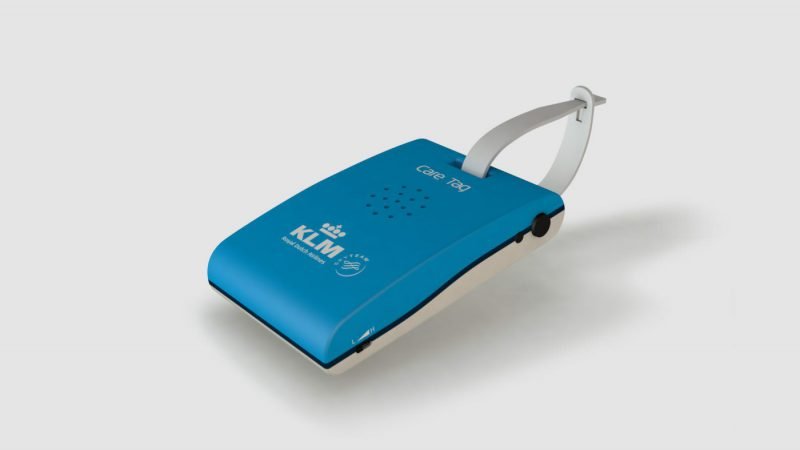
How does it work? The Care Tag is designed to look like a luggage tag. It can be attached to luggage or to the user’s clothes. It holds an offline GPS module and a speaker that automagically provides location-based tips on how to navigate the city. The tag works without an Internet connection. To add to the experience, the audio was recorded by various KLM crew members. It can be used while cycling or walking. Across the city, the crew will assist you, while crossing at busy intersections, while riding your bike, or when you should watch your belongings more closely. The Care Tag provides actually useful tips like how to lock your bike properly, expected taxi fares, and navigating the city’s notorious cycling culture.
The KLM Care Tag is not your typical tourist guidebook that guides tourists to the overcrowded flower market, Rembrandtplein square, and Rokin street. It actively guides tourists away from the most crowded inner-city areas by advising them about places where they can experience “true Amsterdam”. This was done in collaboration with the local government that faces increasing numbers of tourists each year leading to a fear of disneyfication of the city’s inner districts among residents. Frank Houben of KLM says in a local newspaper that “There are a number of places in the city where tourists always just end up which causes overcrowding. With the Care Tag, we want to tell them they could also go elsewhere.”

At the busy Leidseplein square, the Care Tag suggests paying a visit to the either the Beukenplein square in the eastern part of the city or the Noordermarkt market in a less crowded part of the inner city. At the famous flower market right in the center of the city, visitors are advised to continue walking eastwards towards the Utrechtsestraat street for souvenirs, with the likelihood of finding a more authentic souvenir.

Crowds of tourists around the Rijksmuseum
Amsterdam attracted almost 20 million tourists in 2017 — a number that will grow with 5% each year. Along with Paris and Lisbon, Amsterdam has the highest visitor to resident ratio. As the main airline serving Amsterdam Schiphol airport, with a growing number of destinations, aircraft, and passengers, KLM is contributing to the overcrowding of the city. However, the KLM Care Tag might ease the pain in the coming year. For now, the KLM Care Tag is available throughout 2018 in Chinese, Portugese, German, Russian, and English.